
Probiotics, Pickles & a Very Good Lunch
Can we talk about gut health without making lunch sound like a medical appointment?
Somewhere along the way, eating became a project. Count this. Cut that. Buy the powder. Drink something green that tastes suspiciously like regret.
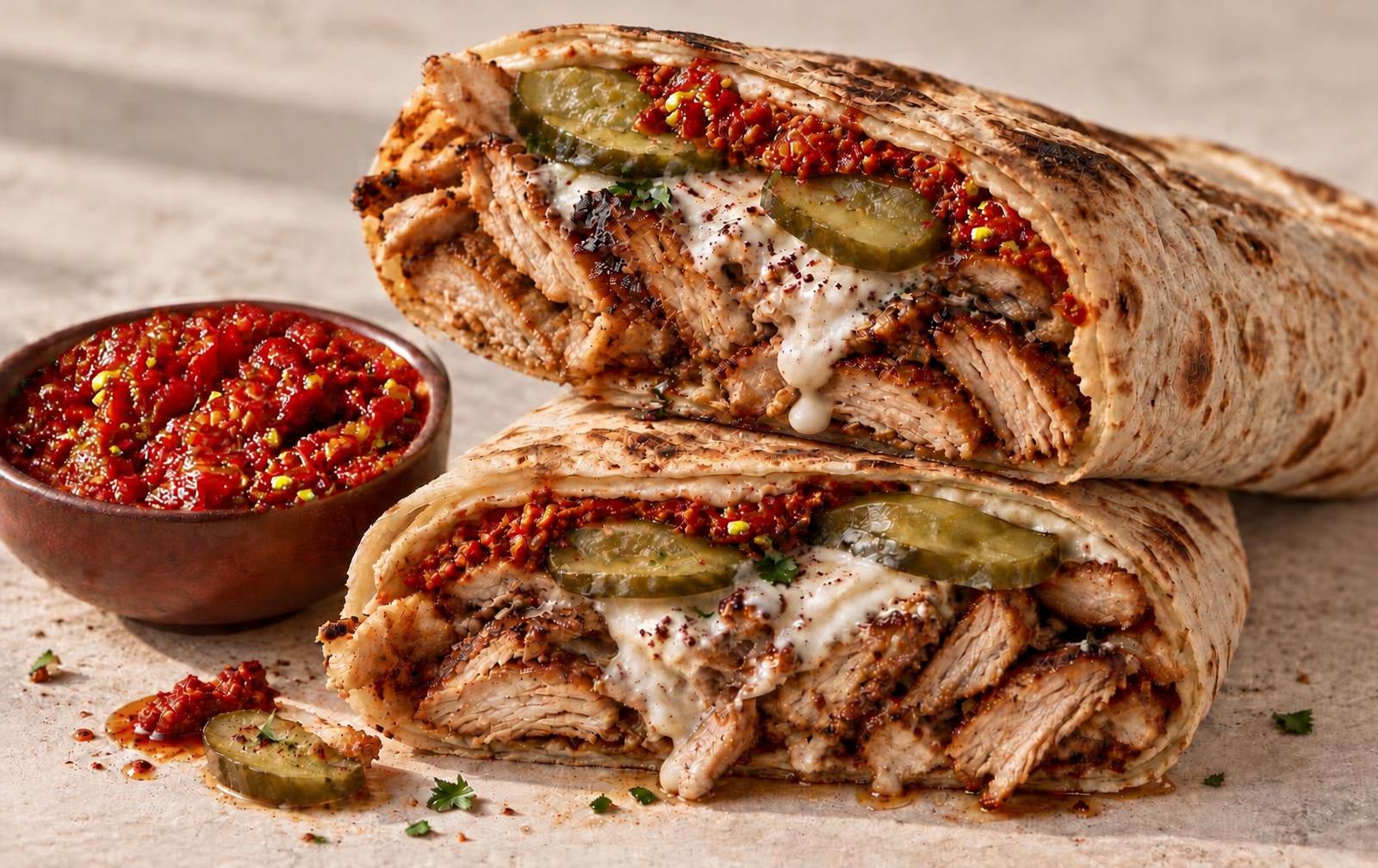
Meanwhile, there’s a plate of shawarma sitting in front of you. Warm bread. Juicy chicken. Toum. And a spoonful of something sharp, spicy and properly fermented that makes you immediately go back for another bite.
That’s a conversation I’d rather have.
First: fermented does not automatically mean probiotic
We’ve already unpacked the difference between fermented and vinegar pickles. The short version: vinegar brings ready-made acidity; salt-brine fermentation lets microorganisms develop that tang over time.
But here’s the part that deserves its own conversation: “fermented,” “contains live cultures” and “probiotic” are not interchangeable.
Three phrases. Three different things. And a sour taste is not a lab report.
Live cultures, probiotics… aren’t they the same thing?
Not quite. And I’m not going to sell you a jar by pretending they are.
Fermented foods are made through the activity of microorganisms. Some still contain live microorganisms when you eat them; others don’t. Heating or pasteurizing a fermented food can reduce or eliminate those live cultures.
“Probiotic” has a specific meaning: live microorganisms that provide a demonstrated health benefit when consumed in adequate amounts. That calls for identified microorganisms, evidence of benefit and enough of them in the product—not simply a beautifully sour jar.
So if someone tells you every fermented food is automatically probiotic, you’re allowed to ask a few more questions.
Which microorganisms? What benefit has actually been shown? And does the product contain the amount used in that research?
Not the most romantic dinner conversation, I’ll admit. But better than buying a promise nobody can explain.
So… are fermented vegetables still worth eating?
Please. Have you tasted them?
That deep tang. The crunch. The pepper heat that builds instead of just shouting. Fermentation gives familiar ingredients another layer of flavor—and that is a perfectly good reason to open a jar.
Food does not need a miracle claim to deserve a place on your plate.
Fermented vegetables can be part of a varied diet. Their nutritional content, salt levels and live microorganisms vary by product. No single jar tells the whole story of how you eat.
Your lunch is not a supplement schedule
I’m not asking you to eat something you dislike because a label says “gut-friendly.”
I’m asking you to find the jar that makes you want the next bite.
Think warm bread, juicy chicken and creamy toum meeting a sharp, peppery smear of shatta. Not a wellness assignment. A very good lunch.
If you want the actual plates, the jars and the combinations I keep talking about, they’re in 7 Ways to Bring Zad w Mouneh to Your Everyday Meals. That’s where we get properly hungry.
A jar is not a miracle. It can still be brilliant.
No single food is going to fix your gut, cancel out your habits or transform your health by Thursday.
Start with a little. Find what you enjoy. More is not automatically better—especially when spice and salt are involved. If you’ve been advised to limit sodium or follow a particular diet, keep that advice in mind.
And keep your Zad w Mouneh jars refrigerated before and after opening. Refrigeration is a storage instruction, not proof that a product qualifies as probiotic.
My vote? Less miracle talk. More really good lunches.
What’s the meal you’d never eat without something pickled or fermented on the side? Tell us in the comments below.
A little reading behind the straight talk
The distinction between fermented foods and probiotics follows the International Scientific Association for Probiotics and Prebiotics: 1.
Taste naturally fermented mouneh
Shop the jarsComments
Be the first to share your thoughts.